
Discipline examples include putting your phone away before studying, keeping a small exercise commitment, and helping a child put away toys after throwing them. Discipline means choosing or teaching a clear behavior, then following through when distractions, frustration, or mistakes get in the way.
Personal discipline concerns your own choices. At school, work, and home, discipline can also mean responding to expectations for someone else’s behavior. The examples below show situations you can adapt, with a decision, words to try, an action, and a follow-up. Use the parts that fit your circumstances and the person involved.
Which Kind of Discipline Fits the Situation?
Self-discipline means managing your own behavior. Corrective discipline addresses an unmet expectation. Positive discipline teaches a child an appropriate response while holding a boundary. These terms describe different purposes; they do not require the same response in every situation.
Punishment imposes an unpleasant penalty. Teaching a replacement behavior or repairing harm focuses instead on what should happen next. Parenting discipline should teach self-regulation: if a child hits, for example, hold the safety boundary and show a safer way to express frustration.
Use this practical guide: after a mistake, clarify what happened and repair any harm. If behavior repeats, check that the expectation was understood and ask what is getting in the way. If someone is in immediate danger, stop the danger first and discuss what happens next when it is safe. At work, follow your organization’s policy and applicable requirements for corrective or progressive discipline. Ask what needs to happen next before reaching for a harsher response.
Personal Discipline Examples for Ordinary Days
Personal discipline is easier to use when the next action is concrete. Try these ordinary-day examples and adjust them to fit your schedule.

1. Put Your Phone Away Before Focused Work
Say, “Messages can wait until this work block ends.” Put your phone out of reach for 20 minutes, then check it afterward. For focus-heavy work, task switching can reduce focus and efficiency, so make one task the focus of the block.
2. Start the Difficult Task Before You Feel Ready
Say, “Open the file and write the first sentence.” Do that now, then decide whether to continue after five minutes. Before you stop, leave the next action visible, such as a note that says, “Add the second example.” That gives you a clear starting point next time.
3. Keep a Smaller Exercise Commitment
If your planned walk no longer fits, choose a five-minute walk if it suits your health and circumstances. The decision is to keep a workable commitment rather than abandon the plan for the day. If you enjoy listening to an audiobook while walking, use the temptation bundling builder to choose a pairing that appeals to you.
4. Follow Your Bedtime Cue
At your chosen wind-down time, put your phone on its charger and begin getting ready for bed. After a late night, return to that cue the next evening. If you want a smaller starting action, choose from these two-minute habit examples.
A useful commitment identifies a clear action, makes room for missed days, and fits an ordinary routine. These examples put that idea into practice.
Discipline Examples for Students and School
A useful discipline response depends on what happened. A missed skill needs practice; a broken classroom expectation needs a clear way to return to it.
5. Begin an Assignment Before Its Deadline
Say, “After class, outline the first paragraph.” Put that action on today’s list and check it before adding more work. “Study harder” leaves the starting point unclear, while an outline gives you a specific first step. If the assignment needs interim deadlines, adapt the short-term goal examples to name the next deliverable.
6. Repair a Classroom Interruption
An adult can say, “Let them finish, then take your turn.” Return the student to the discussion, then agree on a signal to use if they interrupt again. If the difficulty is a skill the student has not learned yet, rather than a classroom expectation they broke, use the deliberate practice examples to choose a focused practice task.
Discipline Examples at Work
At work, discipline can mean managing your capacity or addressing a missed expectation.
7. Protect an Existing Commitment
Say, “I can take this on if we move the current deadline. Which comes first?” Decide what needs attention now and what can wait, rather than accepting every request at once when you are overloaded. For competing requests, sort them with the Eisenhower Matrix examples.
8. Address a Repeated Missed Handoff
Say, “The file was missing at handoff. What blocked it, and what will change next time?” Agree on who owns the next handoff, when it is due, and when you will check in. The first response manages capacity; the second establishes accountability. For formal escalation, follow the organization’s policy and applicable requirements.
Positive Discipline Examples for Children
With children, choose a response that fits their age, understanding, and immediate situation. Keep the boundary clear while showing what they can do instead.
9. Hold a Boundary During a Toddler’s Tantrum
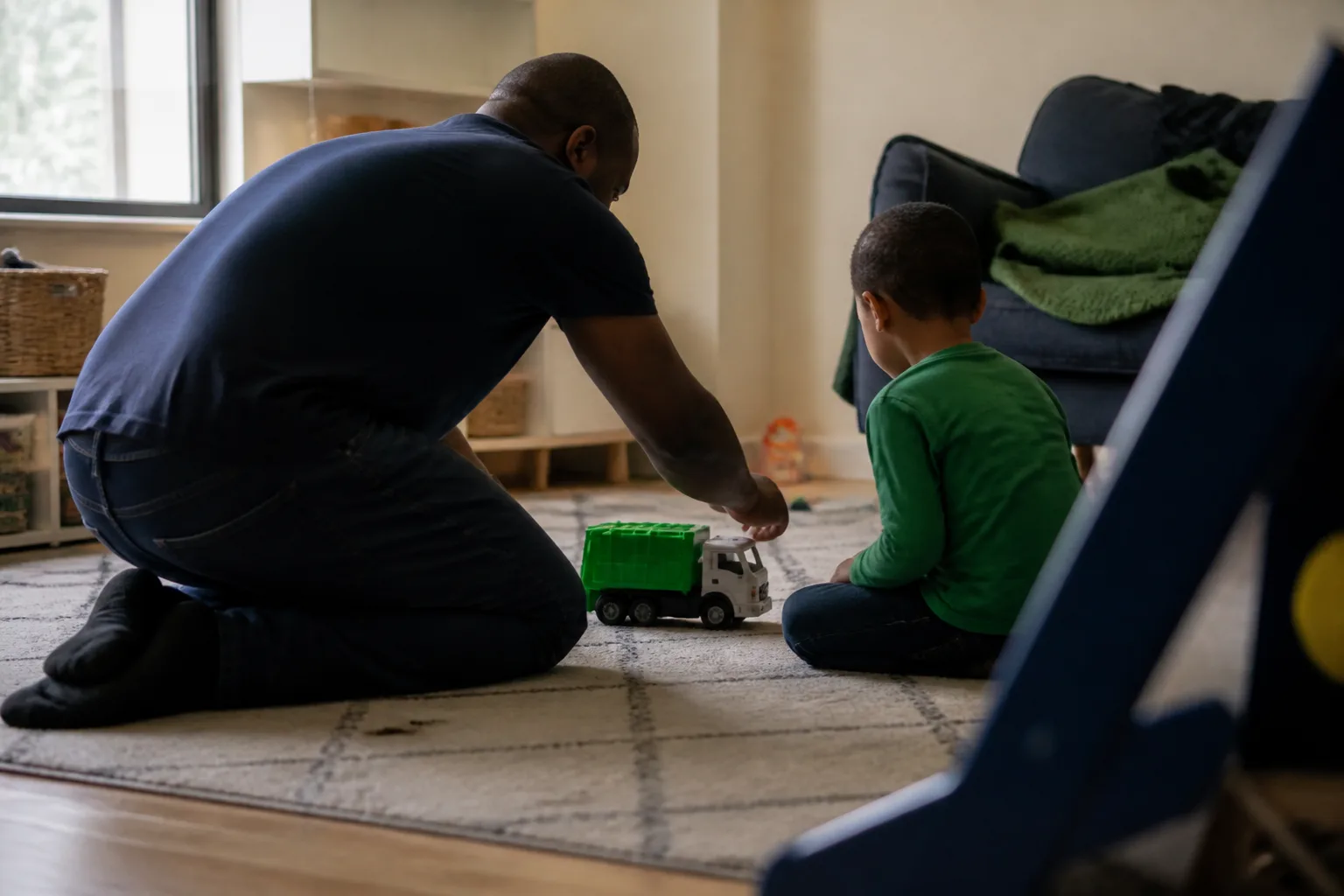
Say, “You’re upset. I won’t let you hit.” Calmly block the hitting, move to a safe space if needed, and offer a safe alternative once the child can engage. For children from birth to age three, guidance recommends supervision, a clear and firm voice, and redirection. The decision is to hold the safety boundary while offering a behavior the child can do.
10. Respond When a Child Throws a Toy
For a child ages three to eight, give one short, clear direction at a time: “Put the truck on the floor.” If throwing continues, set that toy aside and offer another activity. Later, practice safe play together.
Setting aside a toy that was thrown is a logical consequence connected to the behavior. A natural consequence might be that a drawing remains unfinished if its paper is torn. Adults should intervene rather than allow a dangerous natural consequence to happen.
When the child puts the truck down gently, say, “You put the truck down gently.” Name the action you want to acknowledge, then practice safe play together. Praise makes the desired behavior clear; it is not a promise that tantrums will stop.
Turn One Example Into a Repeatable Practice
Copy this template and fill in each blank:
When ___ happens, I will ___. If I miss it, my next action is ___. I will review this on ___ .
The first blank names your trigger. The second names the behavior you want and what you will do right away. The third sets a follow-up review, so you can see what needs adjusting.
For example: “When I close my lunch container, I will walk for five minutes. If lunch is interrupted, I will walk after my next meeting. I will review this Friday.” Planning how to resume after interruptions makes restarting part of the commitment. If you need a cue from a routine you already have, browse the habit stacking examples.
At review, ask what got in the way and change the cue, action, or timing. When reviewing your year, look for a recurring obstacle rather than judging it by one missed day.
Sources
- Veteran Parenting
- Less Hustle, More Focus: A Better Way to Manage Your Time | Office of Intramural Training & Education at the National Institutes of Health
- Caring for Your Mental Health - National Institute of Mental Health (NIMH)
- Positive Discipline by Age
- Healthy and fit on the go: Goal setting